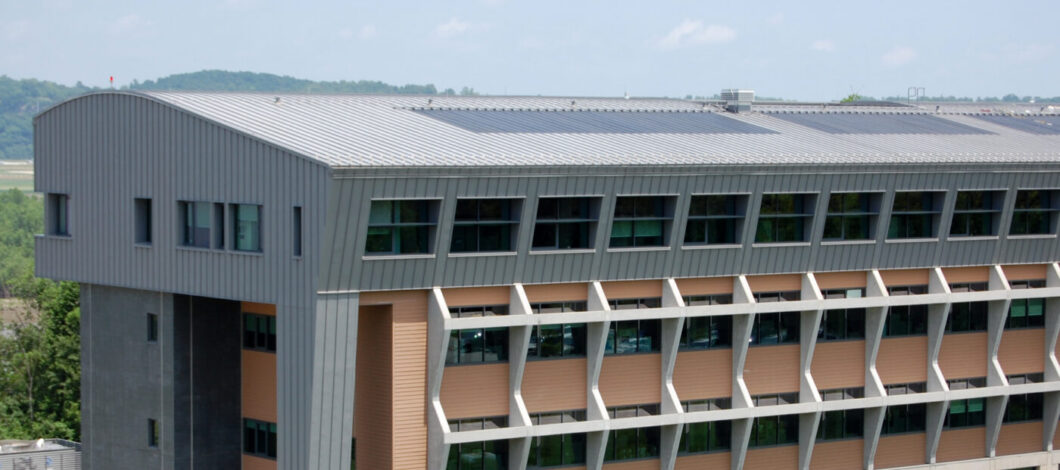
Understanding Standing Seam Roof Applications
Standing seam metal roofing is one of the most recognizable forms of architectural metal roofing. Its clean vertical lines can complement architectural styles ranging from contemporary commercial buildings to more traditional designs, giving project teams flexibility in appearance and application.
But the right standing seam system depends on more than aesthetics. Building type, roof geometry, substrate and performance requirements can all influence which system is appropriate and where it can be used.
What Is A Standing Seam Roof?
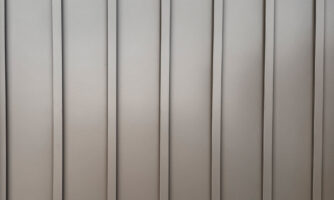
A standing seam roof is a metal roofing system made up of panels joined by raised seams that run vertically along the roof surface. These seams create the distinct linear appearance associated with architectural metal roofing and help connect adjacent panels.
Standing seam systems are available in different panel widths, seam profiles, materials and configurations. These differences allow the roofing system to accommodate a range of building designs and project requirements.
Berridge offers multiple standing seam roofing systems with different profiles and application options.
Where Are Standing Seam Metal Roofs Commonly Used?
Standing seam metal roofing is used across a wide range of building types. The applications below show where these systems are commonly specified and how they can support different architectural needs.
Commercial Buildings
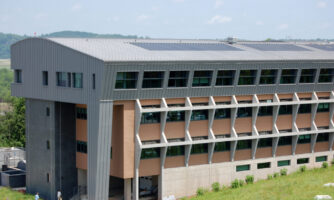
Standing seam roofing is commonly used on commercial buildings where performance and architectural appearance both matter. It works well across a range of building styles, from contemporary developments to more traditional designs.
The defined panel lines can give a roof a stronger architectural presence without overwhelming the rest of the building.
Industrial Facilities
These systems are also used on industrial facilities, where the long, uniform panel lines can suit broad roof areas. The streamlined appearance works naturally with the scale and straightforward architecture of warehouses, manufacturing facilities and similar buildings.
Institutional And Municipal Buildings
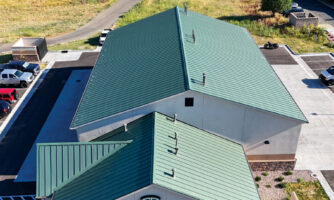
Standing seam systems are also used on schools, civic buildings and other institutional projects where the roof often plays a visible role in the overall design.
The vertical seams can add structure to larger roof areas and help give public-facing buildings a more finished architectural appearance. This can make standing seam a strong fit for projects where durability and design are both priorities.
Residential And Custom Architectural Projects
Standing seam systems can also be used on residential and custom architectural projects where the roof is a more prominent part of the overall design. The crisp seams can reinforce simple roof forms or add definition to more complex architecture.
Berridge standing seam products are used on residential projects as well as commercial applications, giving designers flexibility when a project calls for the look and performance of architectural metal roofing.
What Influences Standing Seam System Selection?
Choosing a standing seam system starts with how the roof is designed and how the panels will be installed. Berridge profiles vary in seam height, panel width, substrate requirements and availability for curved or tapered applications.
Some systems are designed for solid sheathing or metal deck, while others can also be installed over open framing. Certain profiles are available for curved or tapered applications, giving architects additional flexibility when the roof design calls for something beyond a straight panel layout.
Reviewing these differences early helps narrow the options before specification.
Why Is Standing Seam Common In Architectural Metal Roofing?
Standing seam roofing combines a defined panel pattern with concealed fasteners, giving the roof a refined appearance that can become part of the building’s overall design. Depending on the profile, panels may also be used for curved or tapered applications, opening up additional design possibilities.
That versatility allows standing seam to work across very different architectural styles. The roof can support the surrounding design or become a more prominent visual element when the project calls for it.
Find The Right Standing Seam System For Your Project
Explore Berridge standing seam systems for product details and specifications. Each profile offers distinct design and application characteristics to support a range of project needs.
Need help with your project? Speak with a Berridge representative.